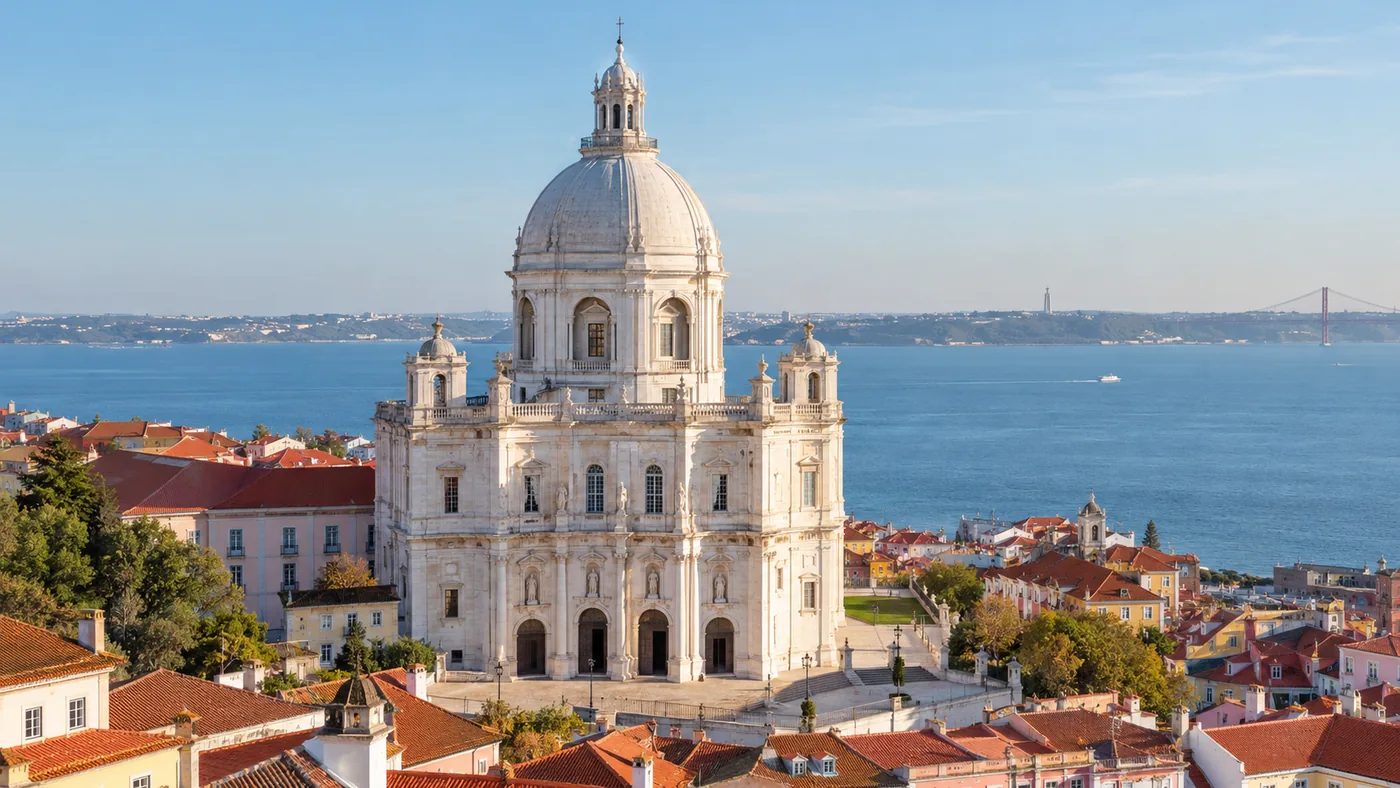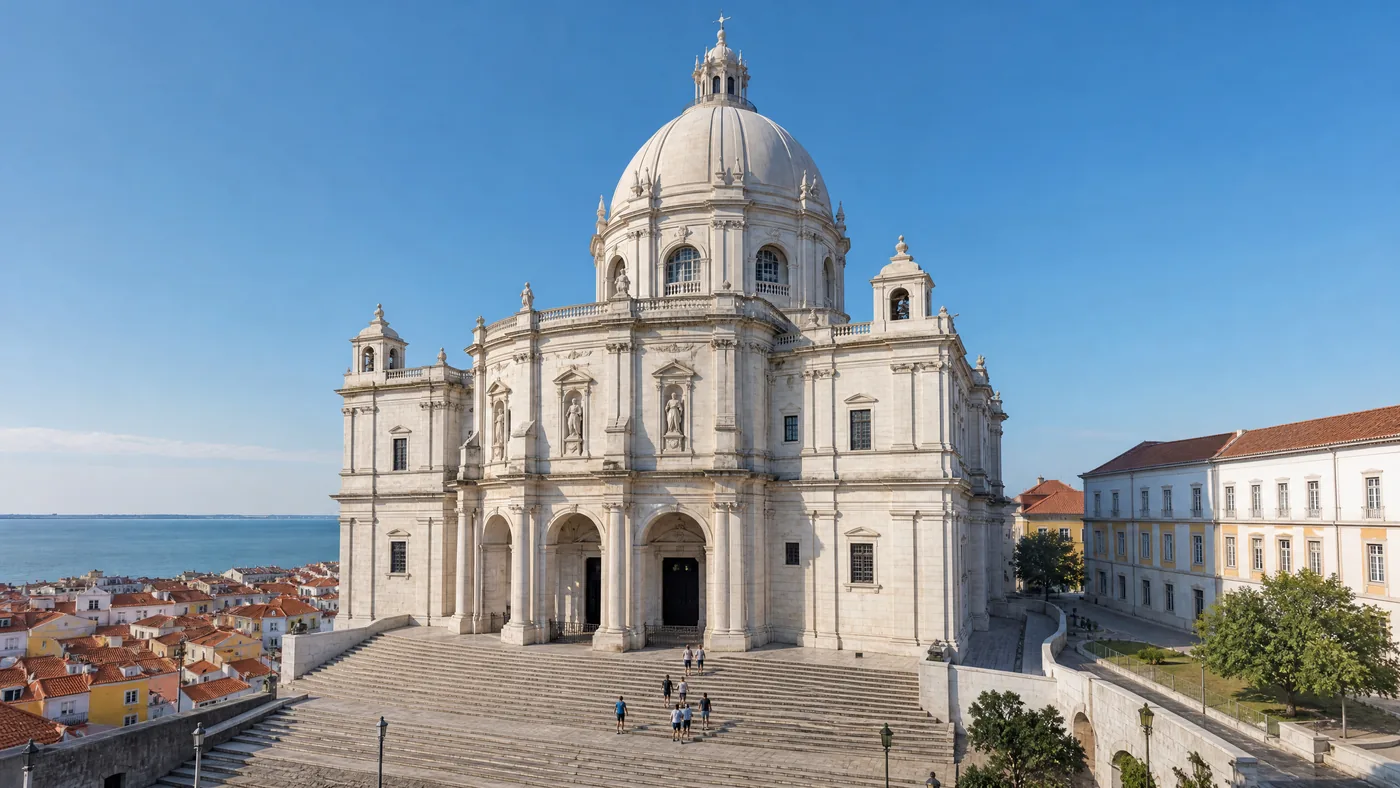
Booking choice: The Pantheon entry ticket, from $11 per person. Check dates Tour details
José Maria Eça de Queiroz is the writer Portuguese readers meet at school and keep rereading for life: sharp, funny, merciless about Lisbon society. On 8 January 2025 his remains were carried in state to the National Pantheon, the first new tomb there since Eusébio's in 2015.
Below: who Eça was, how the ceremony went, where he lay before, why the move took four years after Parliament approved it, and how to find him during your visit. For every name in the building, read our guide to who is buried in the National Pantheon.
The quick answer
Eça de Queiroz (1845 to 1900), author of The Maias, was moved to the National Pantheon in Lisbon on 8 January 2025. He had been buried in Lisbon's Alto de São João cemetery in 1900, then from 1989 in the family tomb at Santa Cruz do Douro, in Baião. Parliament approved the honour unanimously in 2021, but a court case by some of his descendants delayed it until 2024. His tomb is part of the standard visit, on the €10 ticket.
Who was Eça de Queiroz?
Portugal's leading 19th-century novelist, born in Póvoa de Varzim in 1845 and died near Paris in 1900. His best-known book is The Maias.
He studied law at Coimbra, graduating in 1866, then turned to journalism and fiction. With Antero de Quental and Teófilo Braga, whose tomb is also in the Pantheon, he belonged to the "Generation of 70", young writers who wanted to shake Portugal out of its torpor. His day job was diplomacy, as consul in Havana, Newcastle, Bristol and finally Paris, where he died on 16 August 1900, aged 54.
His novels read surprisingly fresh. The Maias follows a wealthy Lisbon family across three generations, with the city's salons and the Chiado as a stage. If you read one book before your trip, make it that one.
| Book | Portuguese title | Why read it |
|---|---|---|
| The Crime of Father Amaro | O Crime do Padre Amaro | A priest, a scandal and a provincial town |
| Cousin Bazilio | O Primo Basílio | Adultery and blackmail in a Lisbon household |
| The Maias | Os Maias | His masterpiece, set in Lisbon |
| The City and the Mountains | A Cidade e as Serras | Paris against the Douro countryside, published after his death |
When did Eça de Queiroz enter the National Pantheon?
On Wednesday 8 January 2025, in a state ceremony led by the President of the Republic, Marcelo Rebelo de Sousa.
The day began at the Assembly of the Republic in São Bento shortly after 9:00. The urn, under the national flag, left on a horse-drawn carriage escorted by a mounted honour guard and crossed the city to Campo de Santa Clara. At 11:00 the national anthem played at the Pantheon, where the President, the Prime Minister Luís Montenegro and the President of Parliament José Pedro Aguiar-Branco were waiting.
Afonso Reis Cabral, a novelist, the writer's great-great-grandson and president of the Fundação Eça de Queiroz, gave the eulogy. The São Carlos National Theatre choir sang, there were readings from his books, and the burial record was signed before the GNR, the National Republican Guard, carried the urn to its tomb. The President called the Pantheon "the place of the immortals" and said the best tribute would be to read Eça.
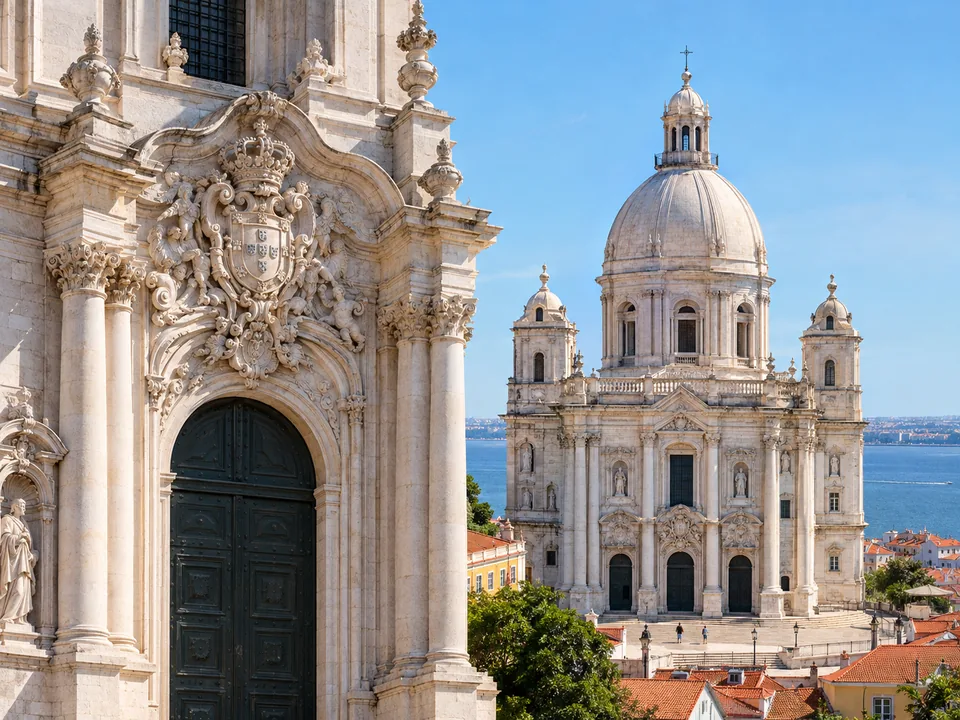
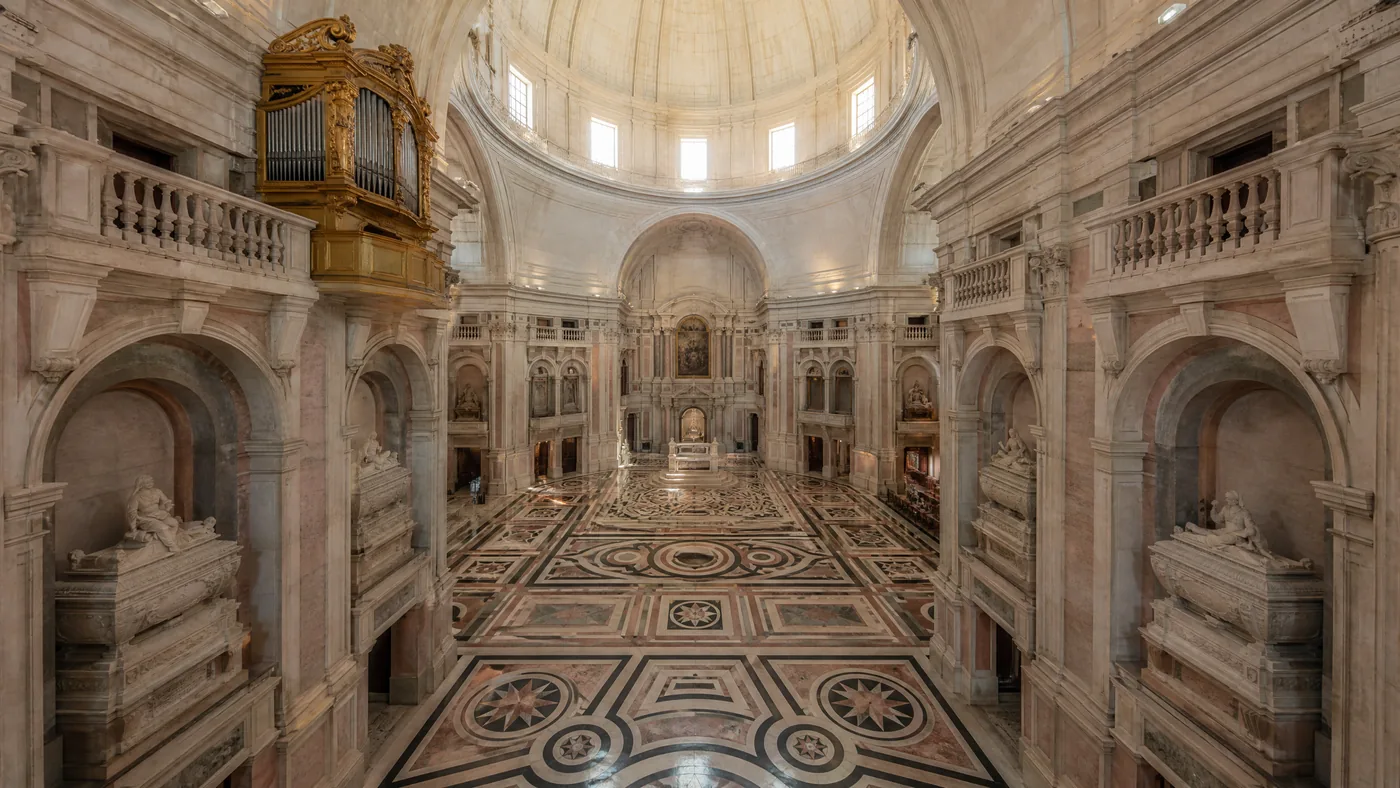
The nave, the tombs of Portugal's writers and the dome terrace, with a mobile ticket ready on your phone.
Check dates for the Pantheon entry ticketWhere was Eça de Queiroz buried before?
First in Lisbon's Alto de São João cemetery, from 1900. In 1989 his remains moved to the family tomb at Santa Cruz do Douro, in Baião, in the Douro valley.
His body came home from France by ship about a month after his death. Almost nine decades later, the Fundação Eça de Queiroz took him north to Santa Cruz do Douro, close to the Casa de Tormes, the country house that inspired The City and the Mountains and now the foundation's home. The foundation held a farewell tribute there in the days before the transfer.
The table below follows the whole journey, from his death to the tomb in Lisbon.
| Date | What happened |
|---|---|
| 25 November 1845 | Born in Póvoa de Varzim |
| 16 August 1900 | Dies in Paris, aged 54 |
| September 1900 | Buried in the Alto de São João cemetery, Lisbon |
| 1989 | Moved to the family tomb at Santa Cruz do Douro, Baião |
| 15 January 2021 | Parliament votes Pantheon honours unanimously |
| 25 January 2024 | Supreme Administrative Court clears the transfer |
| 8 January 2025 | Enters the National Pantheon |
Why did the transfer of Eça de Queiroz take so long?
Some of his descendants went to court to keep him in Baião. The Supreme Administrative Court ruled in favour of the transfer in January 2024.
Parliament approved Pantheon honours for Eça unanimously on 15 January 2021, and a ceremony was set for 27 September 2023. About a week before, six of his great-grandchildren filed an injunction. The family was split: of 22 great-grandchildren, 13 backed the move and 3 abstained. The court found a majority of those entitled to decide in favour, and the new date was set for January 2025.
President Rebelo de Sousa admitted at the ceremony that nobody knows what Eça himself would have wanted, and called the transfer an "obvious act of justice".
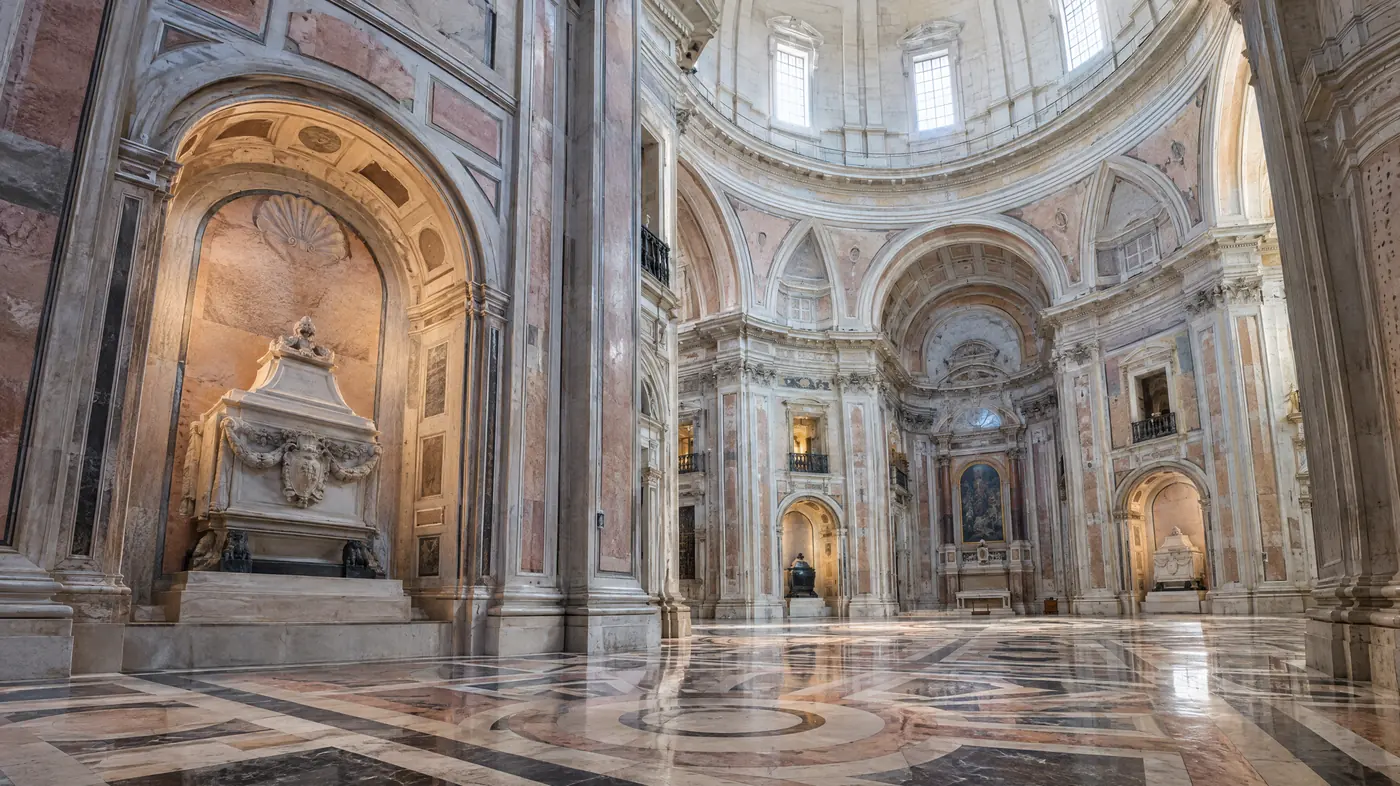
How do you see Eça de Queiroz's tomb on a visit?
Buy the standard ticket, €10 at the desk or a mobile ticket online. The tombs are on the ground floor, where the route is open to visitors with reduced mobility.
Plan on about 1 hour for the whole building: the nave with its coloured marble floor, the cenotaphs to Camões and the navigators, the tombs, then the climb of about 180 steps that guests count to the dome terrace. Staff at the entrance can point you to Eça's tomb. The Pantheon is open Tuesday to Sunday, 10:00 to 17:00 from October to March, and closed on Mondays.
The entry ticket on GetYourGuide is a mobile ticket from $11, non-refundable, so it suits a fixed date. With the Lisboa Card, entry is free. To follow Eça's Lisbon afterwards, head west to the Chiado, the setting of so much of The Maias, on the Best of Lisbon walk.
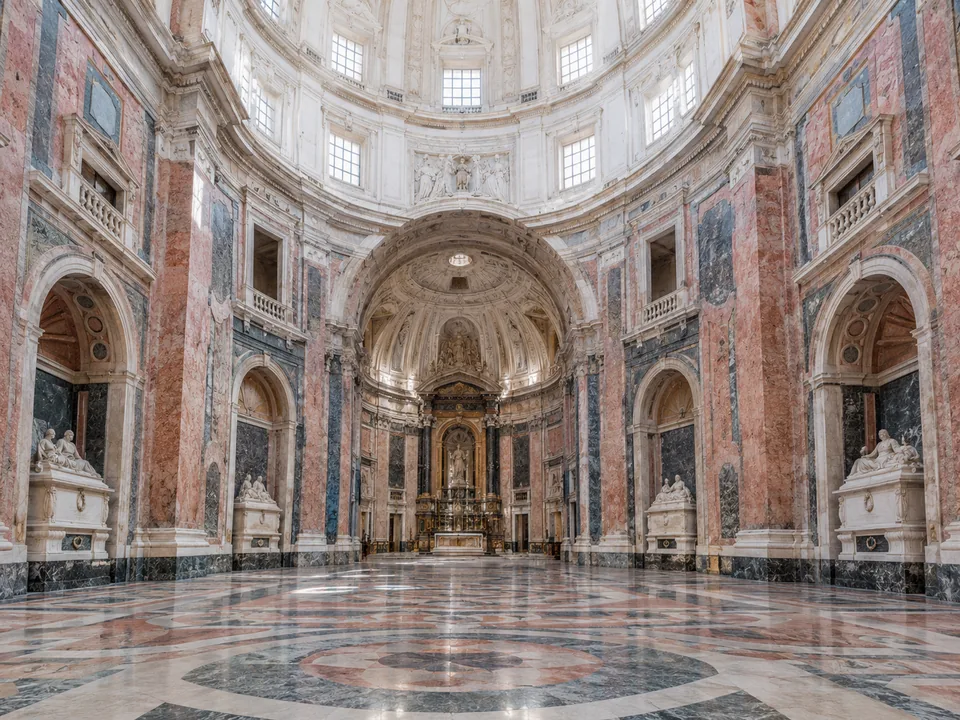
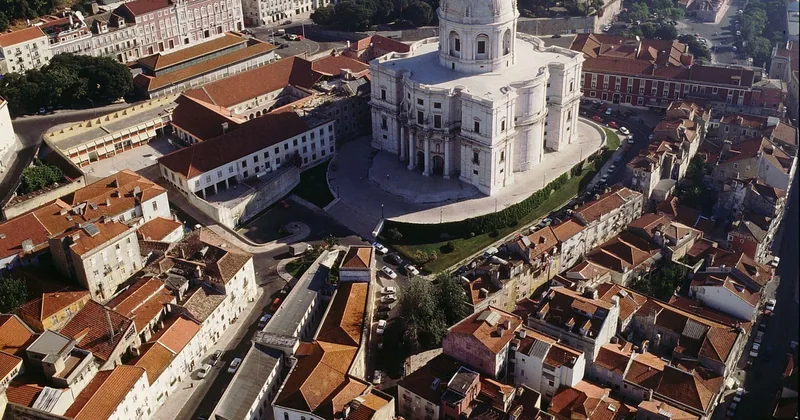
A mobile ticket for the nave, the tombs of Portugal's great writers and the terrace around the dome, at your own pace.
Explore the Pantheon entry ticket Tour detailsWhich other writers are buried in the National Pantheon?
Six, besides Eça: Almeida Garrett, João de Deus, Guerra Junqueiro, Aquilino Ribeiro and Sophia de Mello Breyner Andresen, plus Teófilo Braga, writer and president.
Camões, Portugal's national poet, has a cenotaph rather than a tomb: his tomb is at the Jerónimos Monastery in Belém. Garrett, João de Deus and Junqueiro came from Jerónimos too, where the National Pantheon was kept from 1836 until Santa Engrácia was finished in 1966. Amália Rodrigues, who sang Camões and many other poets, has been here since 2001.
| Writer | Known for | In the Pantheon |
|---|---|---|
| Luís de Camões | The Lusiads, the national epic | Cenotaph (no remains) |
| Almeida Garrett | Poet, playwright; helped found the Pantheon in 1836 | Tomb, moved from Jerónimos |
| João de Deus | Poet and teacher of reading | Tomb, moved from Jerónimos |
| Guerra Junqueiro | Satirical poet | Tomb, moved from Jerónimos |
| Teófilo Braga | Writer and President of the Republic | Tomb, moved from Jerónimos |
| Aquilino Ribeiro | Novelist | Tomb, since 2007 |
| Sophia de Mello Breyner Andresen | Poet | Tomb, since 2014 |
| Eça de Queiroz | Novelist, The Maias | Tomb, since 2025 |
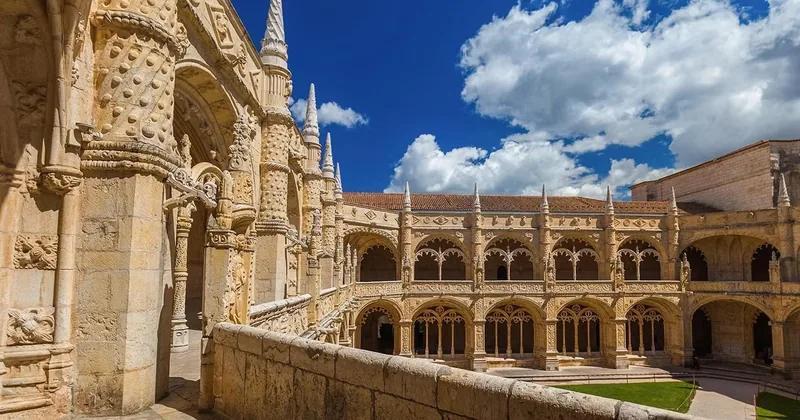
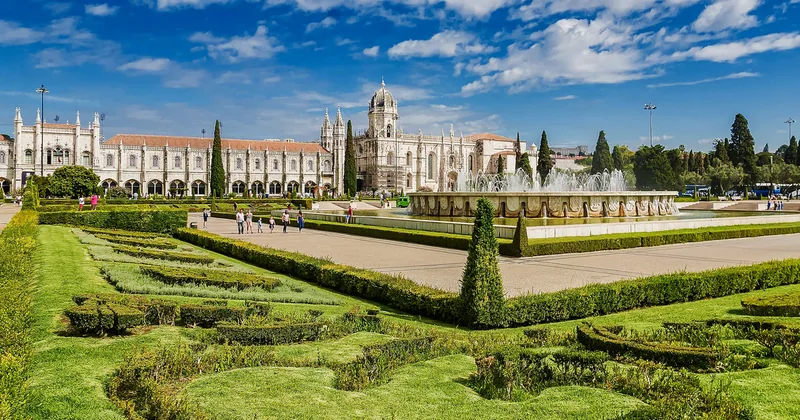
Entry to the Jerónimos Monastery in Belém, where Camões lies and where the National Pantheon was kept until 1966.
Check dates for the Jerónimos Monastery ticketFrequently asked questions
When was Eça de Queiroz moved to the National Pantheon?
On 8 January 2025, in a state ceremony in Lisbon, 125 years after his death.
Where was Eça de Queiroz buried before the Pantheon?
In Lisbon's Alto de São João cemetery from 1900, then from 1989 in the family tomb at Santa Cruz do Douro, in Baião.
Can you visit Eça de Queiroz's tomb?
Yes. It is part of the standard visit to the National Pantheon, open Tuesday to Sunday. The standard ticket costs €10, and entry is free with the Lisboa Card.
Is Eça de Queiroz the newest person in the National Pantheon?
Yes. He is the most recent burial, after Eusébio in 2015. A plaque to Aristides de Sousa Mendes was added in 2021, without a burial.
Ready to book
Choose your ticket
These options are non-refundable, as each card shows. Prices are from-prices in USD and move with the season.
National Pantheon Entry Ticket
- Entry to the National Pantheon
- The nave, tombs and cenotaphs
- The dome terrace, by the stairs
Lisboa Card: 24, 48 or 72 Hours
- Free entry to the National Pantheon
- Free entry to about 50 museums and monuments
- Unlimited public transport, tram 28 included
Jerónimos Monastery Entrance Ticket
Where the National Pantheon was before 1966